
We Ghost, We Avoid, We Withdraw
We Ghost, We Avoid, We Withdraw
by Mario A. Campanaro
"Our imagination is a wonderful thing. It is one of the reasons this work is not only fun, but transformative. That said, we must always remember that we need to be in control of our instrument, and that includes our mind.
It is very easy for the mind to tell stories based on assumptions or feelings rather than facts or truth. For example, you send someone a message and hours go by without a response. The mind starts working. Did I say something wrong? Are they upset with me? Did I do something? Before you know it, you have created an entire narrative that may not be true.
In everyday interactions, someone’s tone might shift or they may seem distant, and immediately the mind tries to explain it. They are upset with me. I must have done something wrong. Without realizing it, we start reacting to a story instead of what is actually happening.
Or maybe you walk out of an audition feeling good, and then you do not hear anything back. The mind immediately fills in the silence. I am not good enough. They did not like me. I am not right for this. But those are stories, not facts. There are so many variables we are not privy to. It could be casting preferences, timing, chemistry reads, production changes, or simply that it was never about us in the way we think it is. And even when we never get the full answer, we still have a choice not to turn uncertainty into self judgment.
That is the nature of imagination. It can create a reality that evokes a feeling, and once that feeling is there, it can start to feel like fact. But feelings are not always facts. They often originate from thoughts rooted in our history that trigger emotional responses, and those feelings can narrow the lens through which we take in the world.
This is where an important distinction comes in. What serves us as actors does not always serve us as people in everyday life.
When it comes to character work, that lens is not only helpful, it is essential. An actor must filter their listening and responses through a specific point of view, one shaped by the character’s history. That history informs how they experience the world, and it gives us something active and specific to play.
But in real life, we have to be more aware of how that same tendency can limit us. We do not want fixed assumptions to skew our understanding of what is actually happening. We create stories to make things easier to process. This happened, so it must mean that. They did this, so I will respond this way. Whether those interpretations are true or not, they can feel justified. And often, it feels more comfortable to stay there than to take the harder path of questioning it.
So what do we do? We react. We look for release, relief, or even payback, often to protect ourselves from something that may not even be real. Or we avoid. We ghost. We withdraw. Then we create more stories to justify those actions.
At a certain point, we have to be honest with ourselves. Nothing changes if we keep repeating the same patterns. Growth requires courage, a lot of it, especially now when the world feels so chaotic.
That courage shows up in being willing to have uncomfortable conversations. Not only expressing what we feel, but also staying open to what others feel. It is something we are all working on, and it is part of what it means to grow.
And bringing it back to acting, that same openness is what allows us to truly understand a character. We explore where they are coming from, why they see the world the way they do, and how they try to navigate it.
But here is something we can all relate to. We are all just trying, moment to moment, to improve our circumstances. Yet if we keep reacting the same way, we keep getting the same results. It can feel like being stuck on a merry go round that keeps moving but never actually takes us anywhere.
So why not evolve? Why not take the opportunity to address things instead of getting stuck in stories tied to past wounds?
The present did not create those wounds. Your history did. So the present deserves something different. It deserves clarity, openness, possibility, generosity, and grace.
Sometimes we close doors too quickly or burn bridges without realizing they might have led somewhere meaningful later on.
When you find yourself creating a story, pause, take a breath, and ask yourself, do I know this is true, or am I assuming? Am I willing to take responsibility and go to the source? Am I open to the possibility that I may have seen something inaccurately?
And there will be times when you were right. But there will also be times when something was misinterpreted because an old wound was triggered. Both can be true.
There is already enough narrow thinking in the world. We do not need to add to it. We can choose to take accountability, stay open, and be willing to have difficult conversations that might lead to a new perspective. That is how we grow, both in our work and in our lives.
Let the present not be imprisoned by the past. Leave it open to something more expansive, more grounded, and more aligned with what is actually true.
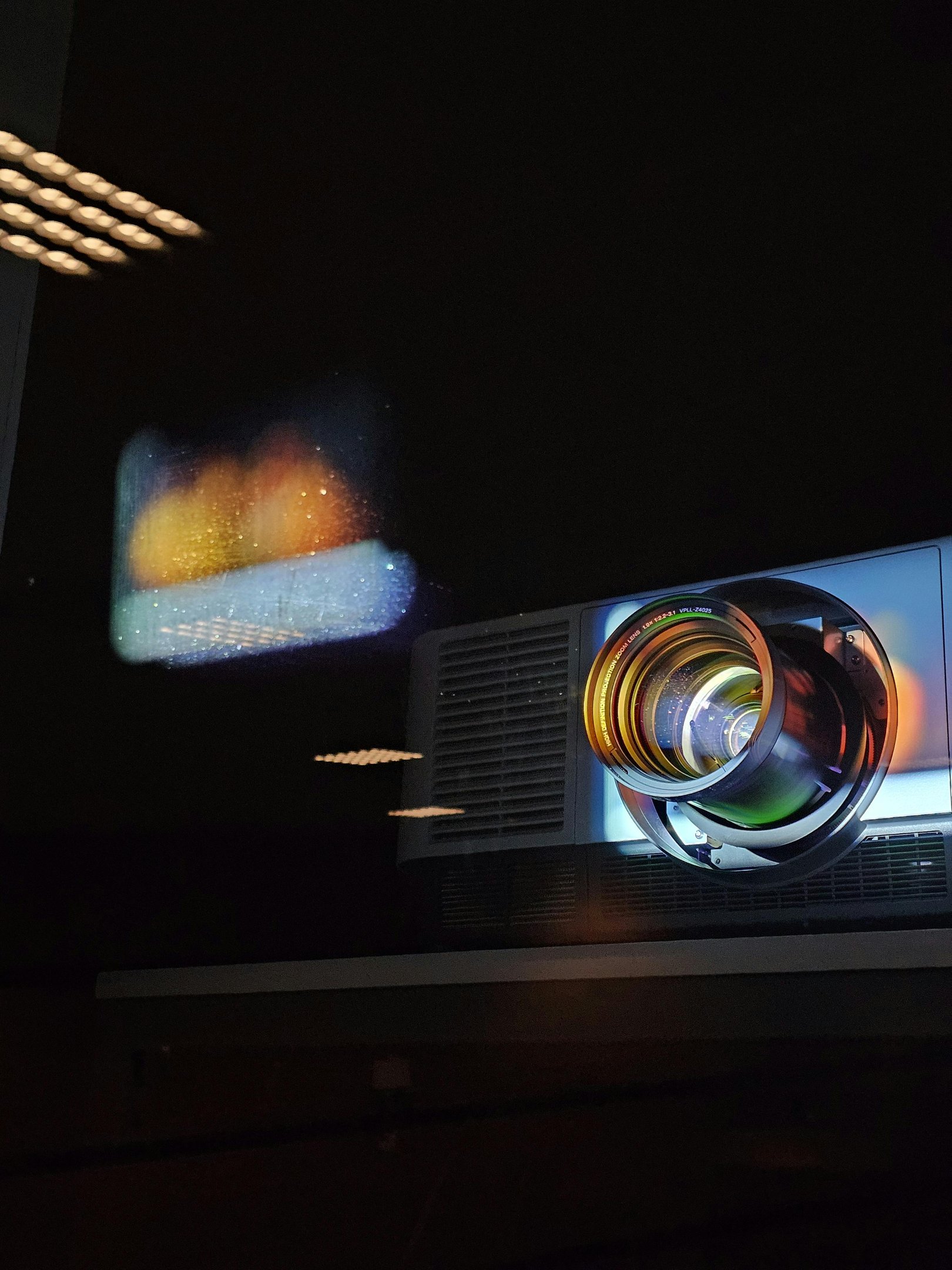
Just like a projector, whatever film we place in it becomes the picture we see and choose to believe. And if we change the film, the picture changes.
So what are you placing in your projector? Something you have been running for a long time, or something new entirely? Something rooted in assumption, or something grounded in truth?"
Copyright © 2026 Mario A. Campanaro, All rights reserved.
Administrative Department
© 2024 MC² Actors Studio. All rights reserved.

1 (310)-853-5064
info@mc2actorsstudio.com